President of the Democratic Republic of East Timor visits the Aga Khan Academy Maputo
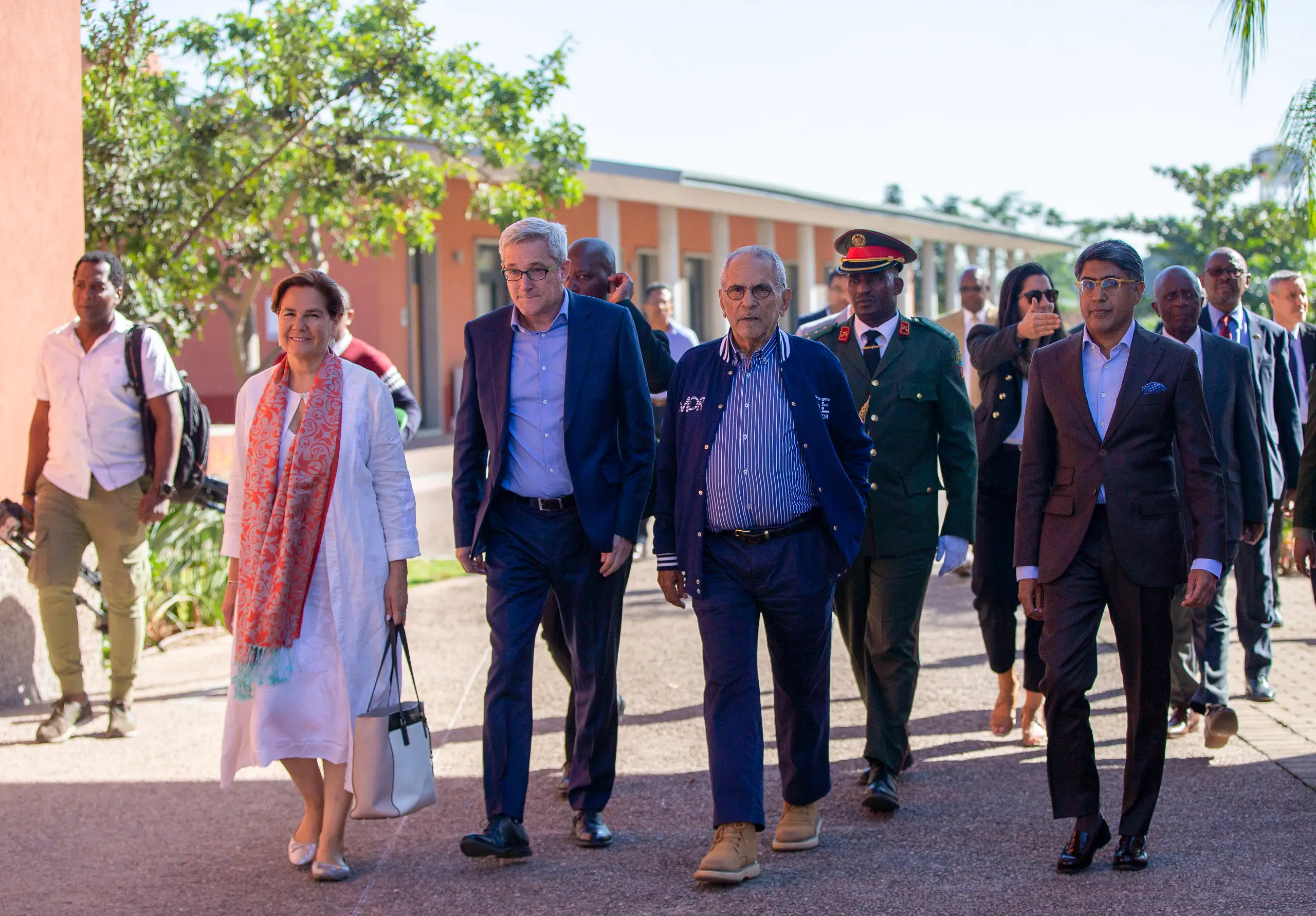
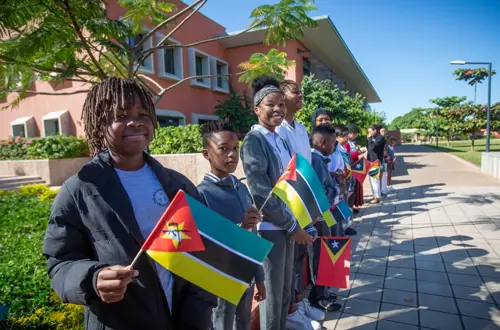
As part of his state visit to Mozambique, His Excellency (H.E.) José Ramos-Horta, President of the Democratic Republic of East Timor visited the Aga Khan Academy Maputo on Saturday, 7 July. The visit was also attended by the Minister of Mineral Resources and Energy Carlos Joaquim Zacarias and his delegations from the two countries.
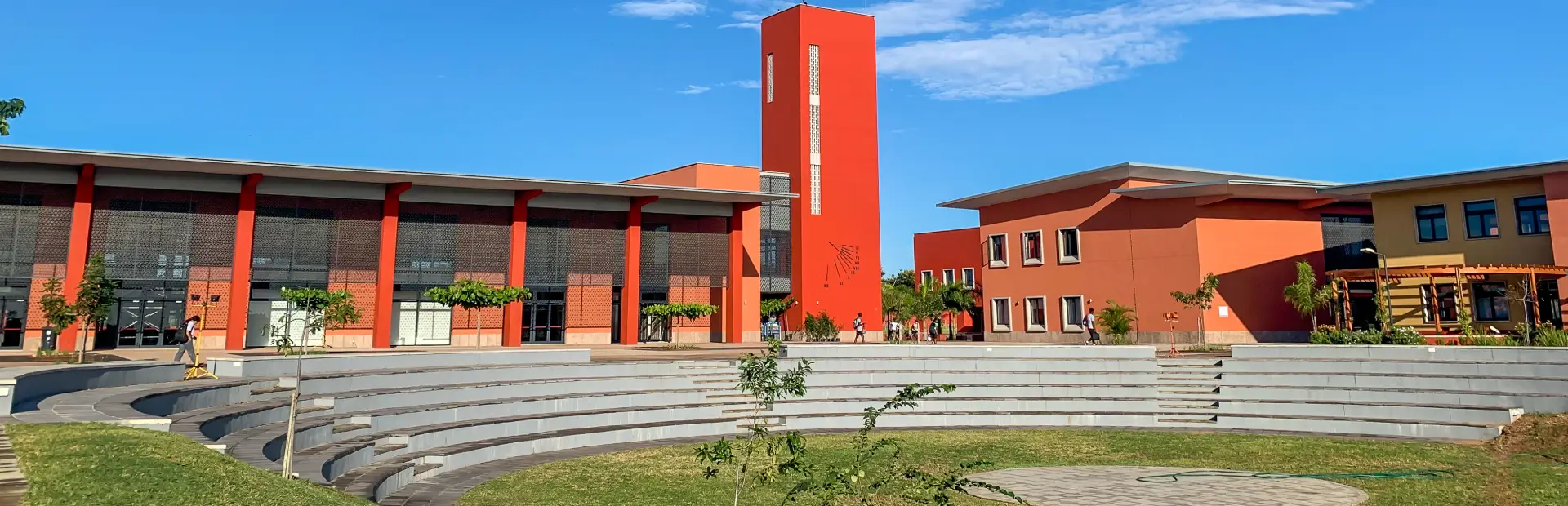
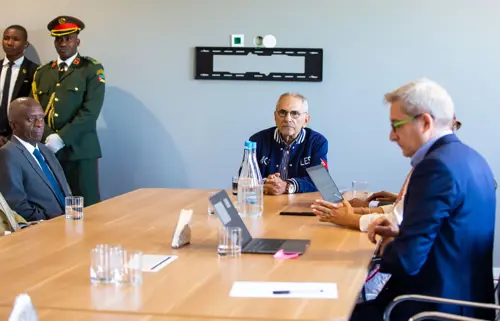
The delegation of the Aga Khan Development Network (AKDN) in Mozambique, composed of Rui Carimo, AKDN Representative Office, and Sónia Neto, Advisor for Diplomatic Relations, Delegation of the Ismaili Imamat, along with Head of Academy Roy White, welcomed H.E. President Ramos-Horta, a Nobel Peace Prize laureate, to the campus. During the visit, a presentation on AKDN’s operations in Mozambique and around the world was shared, followed by a tour of the campus. The esteemed guests also received an opportunity to interact with some students.
At the end of his visit, H.E. President Ramos-Horta said that "... for the first time I have contact with this Academy; an exceptional work in its pedagogical design, in the offer of infrastructure and conditions for children. It is a model that would be ideal for many countries ... although, of course, not everyone has this possibility to do it with such quality, both in physical infrastructure, but also equipment so that students can benefit from the infrastructure and the quality of teachers. This project is a model of inspiration around the world for countries, governments, foundations and the United Nations system."
Before departing, H.E. President Ramos-Horta wrote in the Academy’s guestbook, commending the Academy and AKDN: "I salute the mandate of His Highness the Aga Khan and the meritorious work of the AKDN in Mozambique, East Timor’s sister country, and in the world. I praise the vision and values of the Aga Khan Academy in training future women and men who can contribute to a more just and prosperous society."
Related News
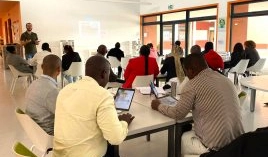
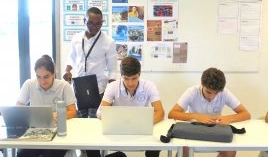

The 10-day course, which had a total of 40 participants,aimed to encourage public school managers to reflect and develop collaborative practices at school that foster the formation of well-informed citizens. “One of the Academy's distinctive features is the provision of continuous professional development programmes for educators,” said PDC Coordinator Mr Aleixo José. “There is an urgent need to implement changes in the conception and management [of schools], and this course serves as a call to reflect on the fundamental concepts and practices of democratic management.” During the sessions, the attendees participated in discussions where they examined the current state of management and leadership practices in their schools. “This course made me reflect on what it means to be a school manager, and to learn more about participative management,” said Ms Berta Olumene, a school manager from the MachavaSede Primary School. “The course will have a long-lasting and positive impact because it has provided me with the tools to mobilise the school council to focus on the development of the school and improve the quality of education for our students.” One of the highlights of the course was the visible change in the attendees' mindsets regarding their methods and how they can implement and share best practices. “I always blamed others for the failures in the school’s management process,” said Mr Eugénio Gingador, a school manager from the Complete Primary School of Matola J. “I am thankful for the Aga Khan Academy Maputo’s initiative to provide this training. It has certainly helped me change the way I perceive my role as a school manager.”

Before the main ceremony, a special pinning ceremony was conducted for the graduating class. This tradition across the Academies marks the completion of the students’ time at the Academy as they join a growing legacy of over 1,700 alumni across the network. The graduates then convened in the Academy’s Commons for the official graduation ceremony, which began with opening remarks from Head of Academy Mr Roy White. “I only need to look around and can see several young people who I know have shown such bravery,” Mr Roy said. “These young people have demonstrated courage in their writing and art. They have shown bravery in their extended essays, oral exams and even on the sports field. Let us not forget their resilience in tackling those maths IA drafts, whether it was the fifth, sixth or perhaps even the eighth iteration!”

“MUN relates with the Aga Khan Curricular Strands and allows students to display a range of skills such as compromise, public speaking, teamwork and building knowledge of international issues and solutions,” said Humanities Teacher Mr Mark Wheatley. “Through this, we hope to develop the students’ skills for them to become future leaders.” Ten students and two teachers, alongside the facilities team at the Academy, started preparing for the conference over six months ago. “We carried out various tasks, such as deciding on the topics for different committees, producing delegate guides for participants, electing different teams and working on the logistics of the event,” said Grade 12 student Alnoor Budhwani, who was also the secretary general of the conference.